
Junking a vehicle titled to your business: who signs and what to keep
Who signs when a business junks a vehicle?
The owner named on the title signs it. When that owner is a company, a person with authority to act for it signs on its behalf. Tell us on the call who'll sign and in what role, and we'll confirm what our driver needs. Keep the sale record: the IRS treats a business vehicle's sale differently.
Contractors, delivery firms, landscapers and small fleets all end up with a van or pickup that's done its last job. At Top Dollar Junk Cars the pickup itself runs as it would for anyone else. What changes is the paperwork around it: who can sign, which papers the company holds, and what the bookkeeper needs afterwards.
Start with the name on the title
Pull out the title before anything else and read the owner line. It decides who signs and what has to happen first.
| The title names | Who signs | Sort out first |
|---|---|---|
| The company (an LLC, corporation or partnership) | A person with authority to act for the company | Who that is, and that they'll be reachable on pickup day |
| You personally, though the business uses the vehicle | You, as the owner | How the business use is recorded for tax |
| A leasing company | The leasing company is the owner | Talk to the lessor before booking anything |
| The company, with a lender's lien | The company, with the lender's release in hand | The lender's release, or a payoff |
The Illinois Secretary of State sets the exact rules on signing a title for a business, and its title and registration pages are the place to check them. We don't guess at them over the phone: tell us how the title reads and who will sign, and we confirm what's needed before the day.
If the company's title has gone missing, the route is the same as for a private seller. Our page on selling without the title covers which papers to gather in Illinois and in Indiana, and how to order a duplicate.
Papers and jobs before pickup
- The title for each vehicle, or a note of what the company holds instead, raised on the call.
- The signer's name and role, so the driver knows who to meet.
- The plates. Under 625 ILCS 5/3-501 the registration ends when the vehicle changes hands; take off the plates and stickers and either send them to the Secretary of State or have them assigned to another vehicle for the fee. A fleet replacing a van can move its plates across.
- Company gear. Toll transponders, fuel cards, GPS trackers, dash cameras, ladders and tools leave with the vehicle if they're still in it.
- The insurance. Take the vehicle off the business policy once it has gone, not while it still sits in the lot.
The same jobs apply to any junk sale, in more detail, on our step-by-step list for selling to a junkyard.
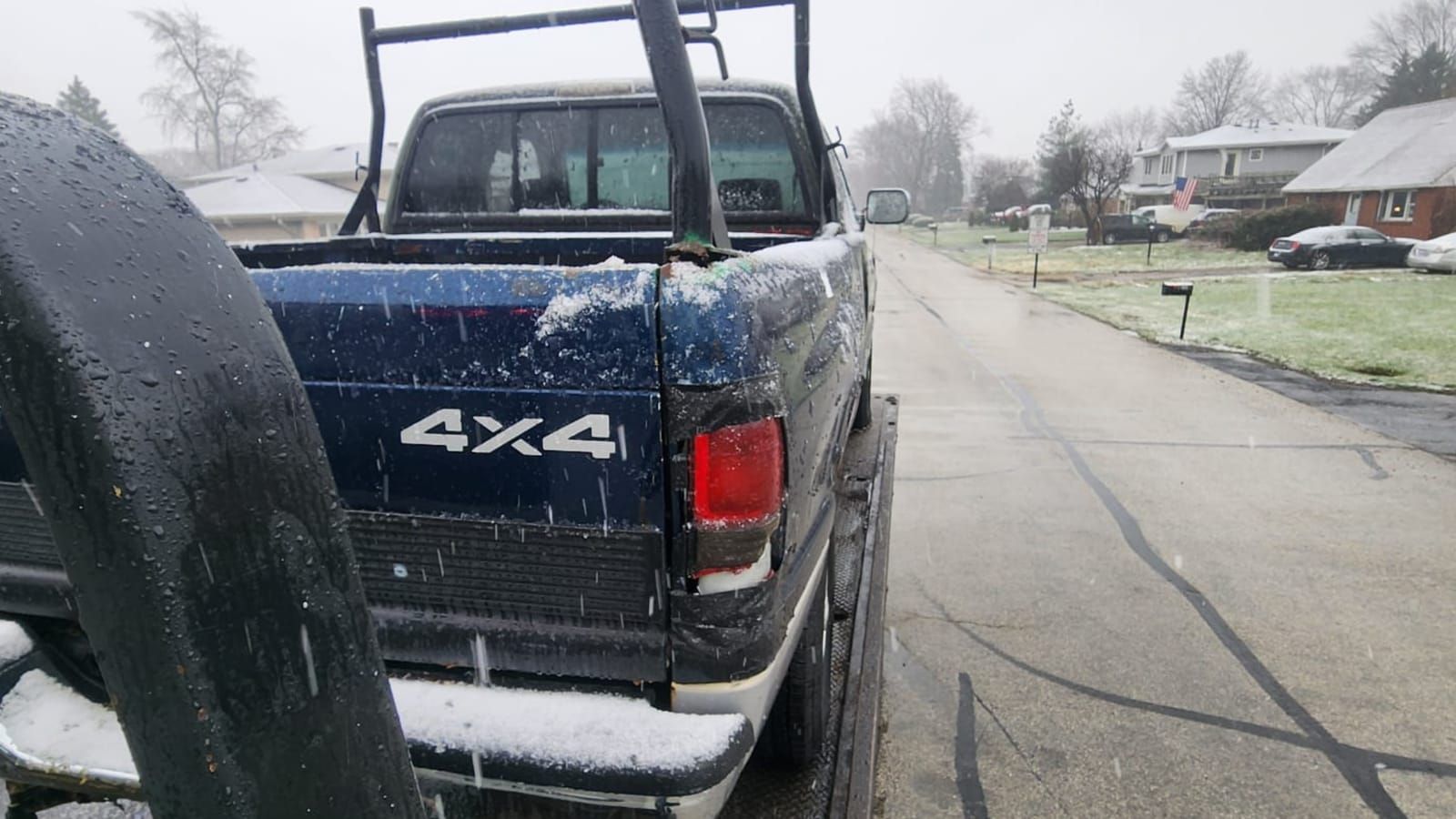
Several vehicles, one visit
One visit can take several vehicles from the same address. Give us each vehicle's year, make and model, which ones have titles, which have keys, and whether any are boxed in behind others. A yard with a locked gate or a tight row of trucks needs a word on the call; our page on how a pickup day runs covers access in general.
Dead work vehicles in shared lots need watching. In Alsip, § 19-106 of the village code lets owners of shopping, business and industrial lots opt in to a ban on overnight parking for vehicles without their decal, which the village then enforces. A broken-down van left in a neighbor's lot overnight can become a ticket, so book the pickup early in the day.
What to keep for the books
Selling a business vehicle has tax rules of its own. IRS Publication 544, on sales and other dispositions of assets, sets out the main points:
- Form 4797 is used to report the sale of depreciable tangible property used in a trade or business.
- Depreciable personal property, a work vehicle included, is section 1245 property. The share of the gain treated as ordinary income is the lesser of the depreciation allowed or allowable and the gain itself.
- If the vehicle was used partly for business and partly for personal driving, gain or loss is worked out separately for each part.
That's why the record of the sale matters: the date, the amount, the vehicle and its VIN. If the van has been fully depreciated, its adjusted basis can be zero, so most or all of what it sells for may count as gain. Hand the record to whoever does the company's taxes; this page explains the rules, it doesn't apply them to your figures.